Telstra Rally Australia:
Service Parks
Note: all of the small images link to hi-res versions when you click on them.
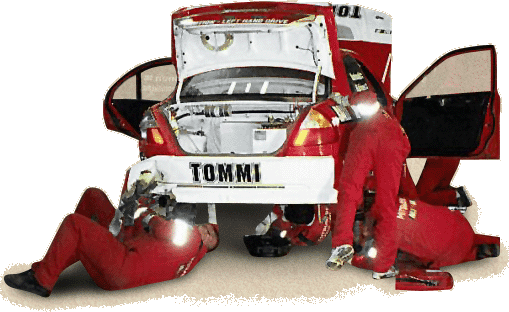
During the middle of the day in between groups of stages, the mechanics are allowed far less time to make any crucial fixes that will keep the car form falling to pieces. Times varied from 20 minutes during some of the days to 45 minutes at the Langley Park Superstage. What could you possibly do in 20 or 45 minutes? A lot -- when you have 6 professional mechanics choreographed on the car at the same time. I had an amazing opportunity to watch some field surgery in action. Tommi Makinen had just pulled off a very successful stage at Langley Park, but he had slid the rear left corner of the car against a barrier at one point while pushing the car just a little too hard. The result was a good time at the cost of some car damage -- a worthwhile sacrifice. The sequence of photos here took a total of 20 minutes from driving the car into the service area to the finished job. In that time they replaced the back bumper with a totally brand new replacement (they carry several with them), replacement of the rear left light assembly, replacement of the rear suspension (they carry between 12 to 40 replacements with them depending on the rally), and countless other little tweaks and adjustments.
F I E L D S U R G E R Y
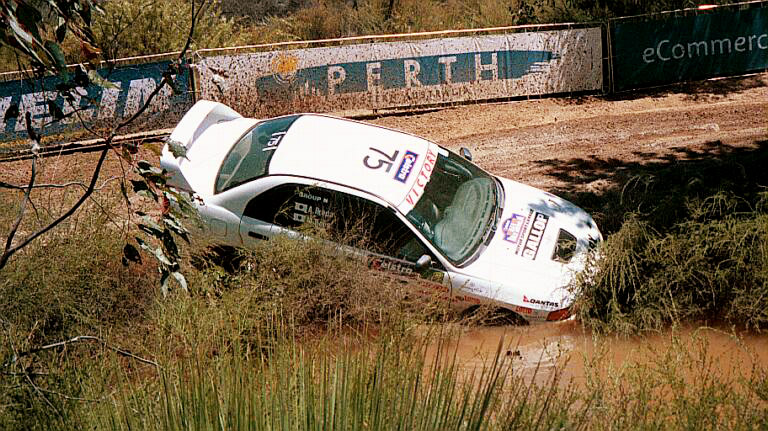
In comes the car. You can see the chunk of fender hanging off the driver's side at the rear of the $500 000 car. That's not Makinen driving.

The crew leaps to work, jacking up the car and prepping it for repairs. All the extra parts they need are already spread around the car. They know exactly what needs replacing before the car even comes in. Five container loads of equipment totalling seven tons are shipped to some rallies.
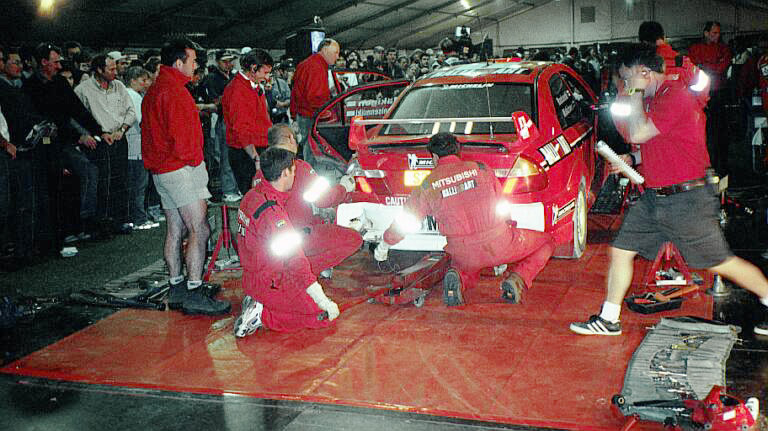
The wheels and rear fender come off. The Mitsubishi team brings 220 wheels to each rally, and they go through over 3000 tires in one season. Most of the tires they use have special foam anti-deflation systems to reduce the effects of punctures. They bring seven to 15 different rubber choices to each event. Michelin provides the team with a dedicated group of five tire fitter/technicians.

There goes the old damaged fender. Several people in the crowd ask if they can keep it. People are telling me that they have things like doors from rally cars and other things at home.

A sledgehammer is an essential bodywork tool. A mechanic gently coaxes (intimidates) the rear corner back into shape to fit the new fender and light assembly in place. It's a tricky job that probably takes longer than any other individual task here. They keep making fine-tuning adjustments (pound! crunch!) while fitting the new pieces.

The new bumper goes on. If only our cars could be fixed this rapidly and easily. The guys working on the rear suspension are almost done too.

You'd never know the car was just in an accident. The original damage was fairly light though. There's not much they'd be able to do if the car rolled or something worse.

Here's one of the 3 truckloads of parts and supplies the team carries with them. They also bring two truckloads of tires. These trucks have been specially designed to fit inside 20ft shipping containers.

Another shot of the inside of a supply truck. The teams are able to do a complete rebuild of each car. At least one spare is brought for every part of the car except the actual body shell, from rear bumper to gas tank to gearbox to steering wheel. Some races the cars receive little more than oil changes, other times they're pretty much completely rebuilt cars. The team even brings all their own food and cooking supplies, and their own toilet paper.

Overall, pretty impressive work! Some other stats: